


National Geographic 1989 May
Publisher: National Geographic
Format: Paperback
ISBN: none
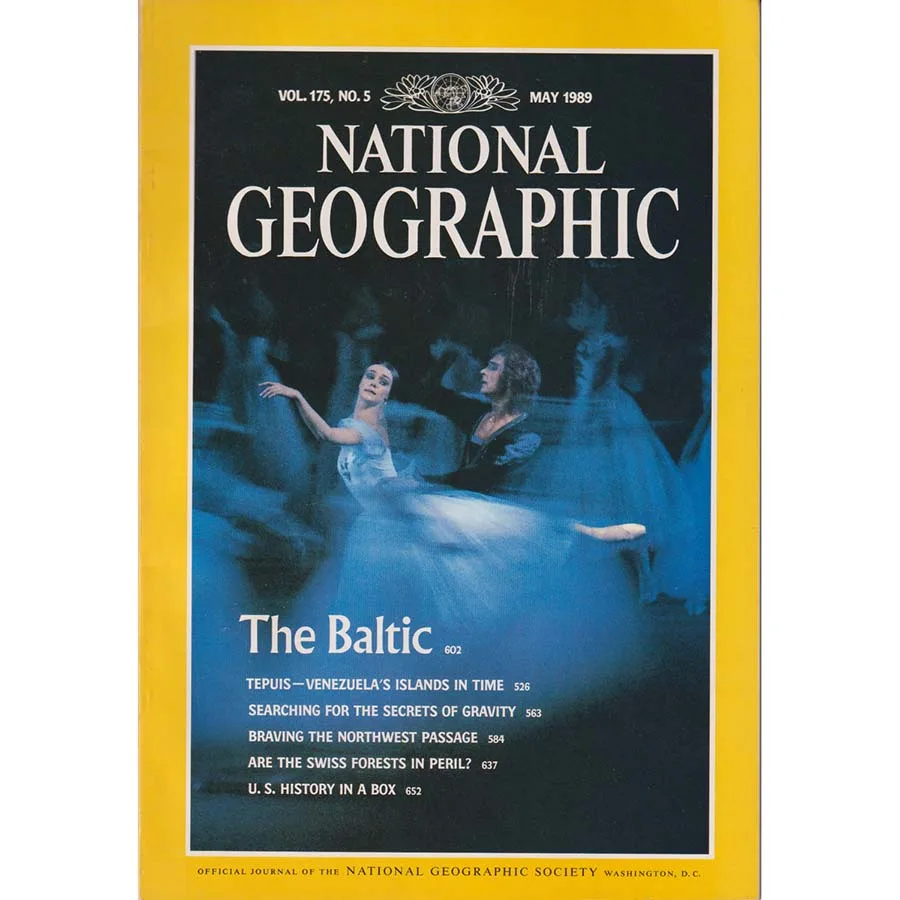
National Geographic, May 1989 arrives wearing the expression of a magazine that knows it’s cultured. The cover is all blue velvet motion and stage-light glamour: dancers mid-swirl like ghosts of elegance, and the simple, confident title “The Baltic.” No exclamation mark. No drama font. Just the implication that you are about to spend your evening being quietly educated, possibly while holding a cup of tea as if it were a champagne flute.
This is classic late-80s Nat Geo: polished, wide-ranging, and faintly amused by how much it can fit between two covers. The lead feature takes you to the Baltic, a region that in 1989 feels particularly electric—poised on the edge of enormous change, full of layered identities, coastlines, histories, and the kind of cultural texture that doesn’t survive tidy summaries. Nat Geo does what it does best: it gives you the landscapes, the people, the everyday details, and the sense that geography isn’t just where things are—it’s why they are.
But then it does the National Geographic thing: it immediately refuses to stay on topic. In the same issue you also get Tepuis—Venezuela’s islands in time (tabletop mountains like nature’s own locked archives), Searching for the secrets of gravity (because why not casually throw physics into your travel reading), Braving the Northwest Passage (cold, danger, and the human urge to poke the map with a stick), Are the Swiss forests in peril? (an environmental concern served with Alpine politeness), and U.S. history in a box (which sounds like a gimmick until you realise Nat Geo can make a storage container feel like an archaeological revelation).
It’s the sort of issue that makes you laugh at its own audacity. You pick it up for “The Baltic” and suddenly you’re thinking about Soviet-era edges, ancient geology, celestial forces, ice-choked routes, forestry management, and archival objects—all before bedtime. In 1989, this was considered normal self-care.
Condition: Good, which is exactly what you want from a magazine that has clearly lived through at least one move, a few coffee-table seasons, and perhaps a brief stint used as a very classy surface for biscuits. Sold by Crappy Old Books, which is the perfect irony: an elegant, globe-spanning, high-gloss education in culture, science, and exploration—acquired from somewhere that sounds like it keeps the classics next to a box of slightly haunted encyclopaedias.
Keep browsing: See more National Geographic books Other books by National Geographic
